A history of hospital food: feeding body and mind
Movement as medicine: exercise in early mental health care
The 5 pillars of historic mental health care
At Glenside Hospital Museum, our collection offers a detailed insight into how Victorian county asylums set out to care for people experiencing mental illness. Despite the bleak stereotypes, these institutions were originally envisioned as safe, structured places where patients could recover with dignity.
Care in these asylums centred around five key pillars: nourishing food, gentle daily exercise, meaningful occupation, ample rest, and a homely environment designed to lift the spirits. Together, these principles formed the foundation of what was then considered progressive mental health treatment.
This blog is one instalment within a five-part series exploring how Glenside Hospital put these ideals into practice. Each instalment will reveal a different aspect of historic care, drawing on stories and objects from our collection to bring the past to life.
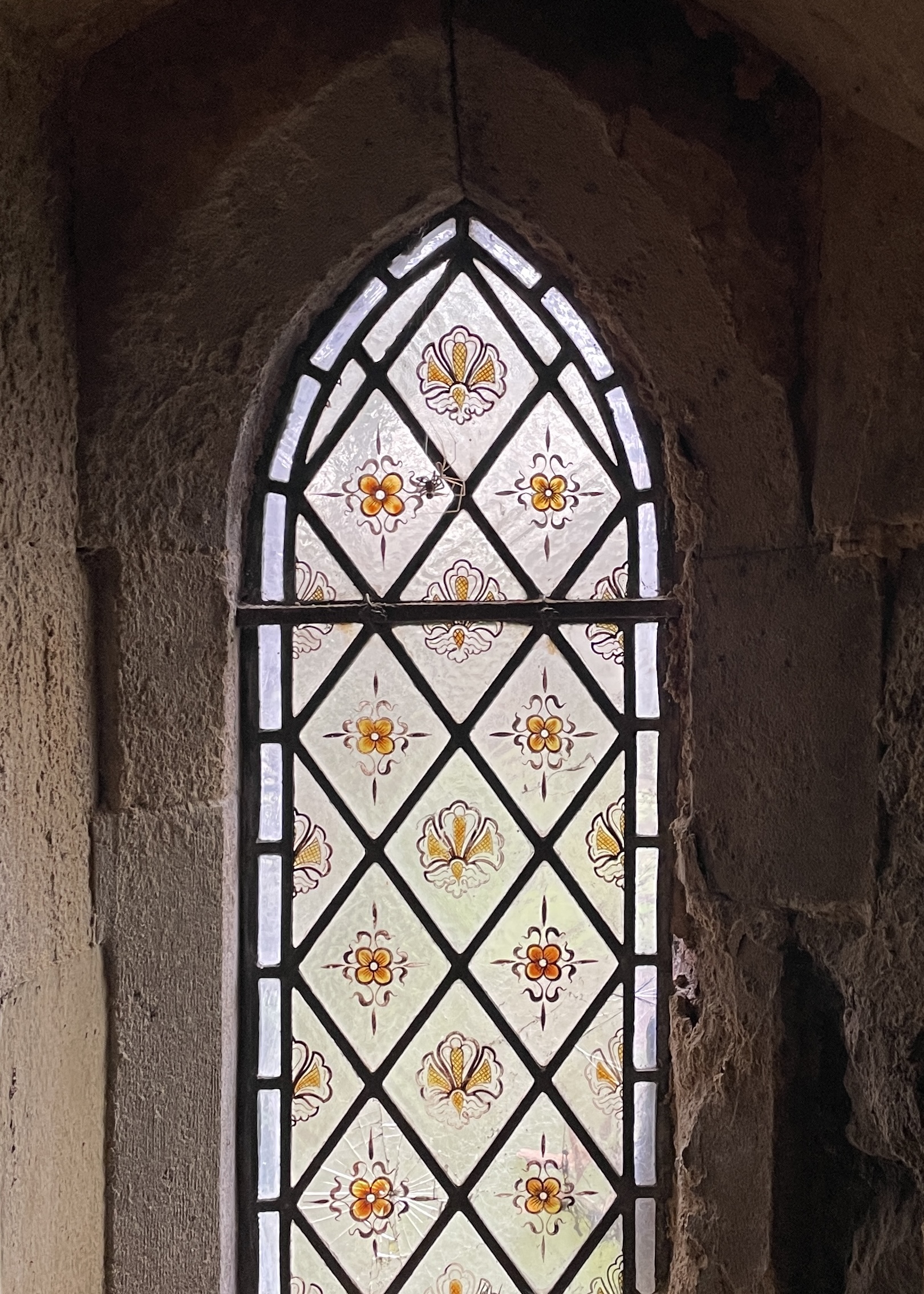
Lifting the spirits
Victorian visions of healing spaces
The environment at Glenside Hospital was considered to be one of the top priorities from its inception as Bristol Lunatic Asylum in 1861. This is a concept we can easily recognise today, with ample evidence available that buildings incorporating natural light, views of green space and calming colours aid recovery from illness.
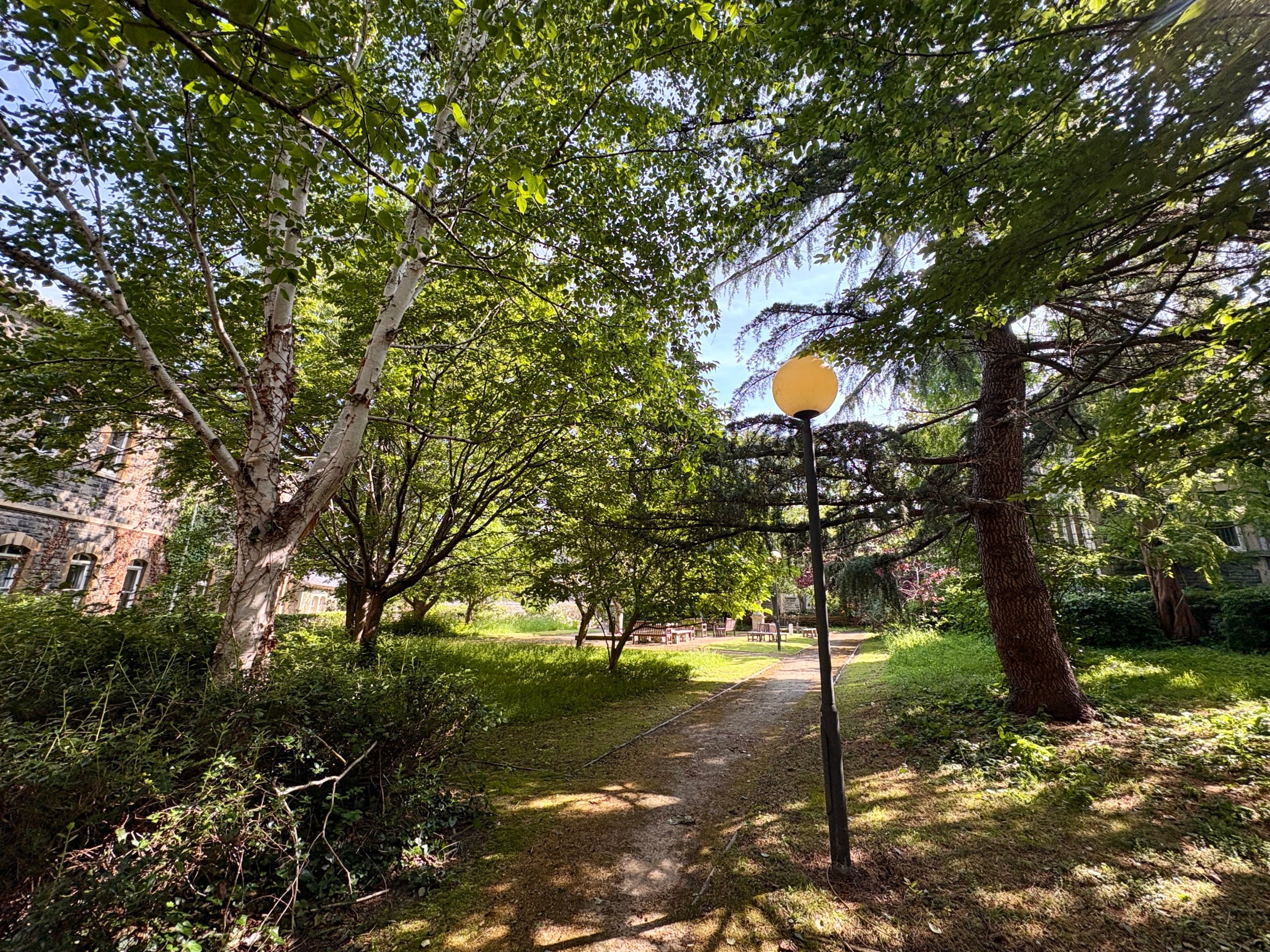
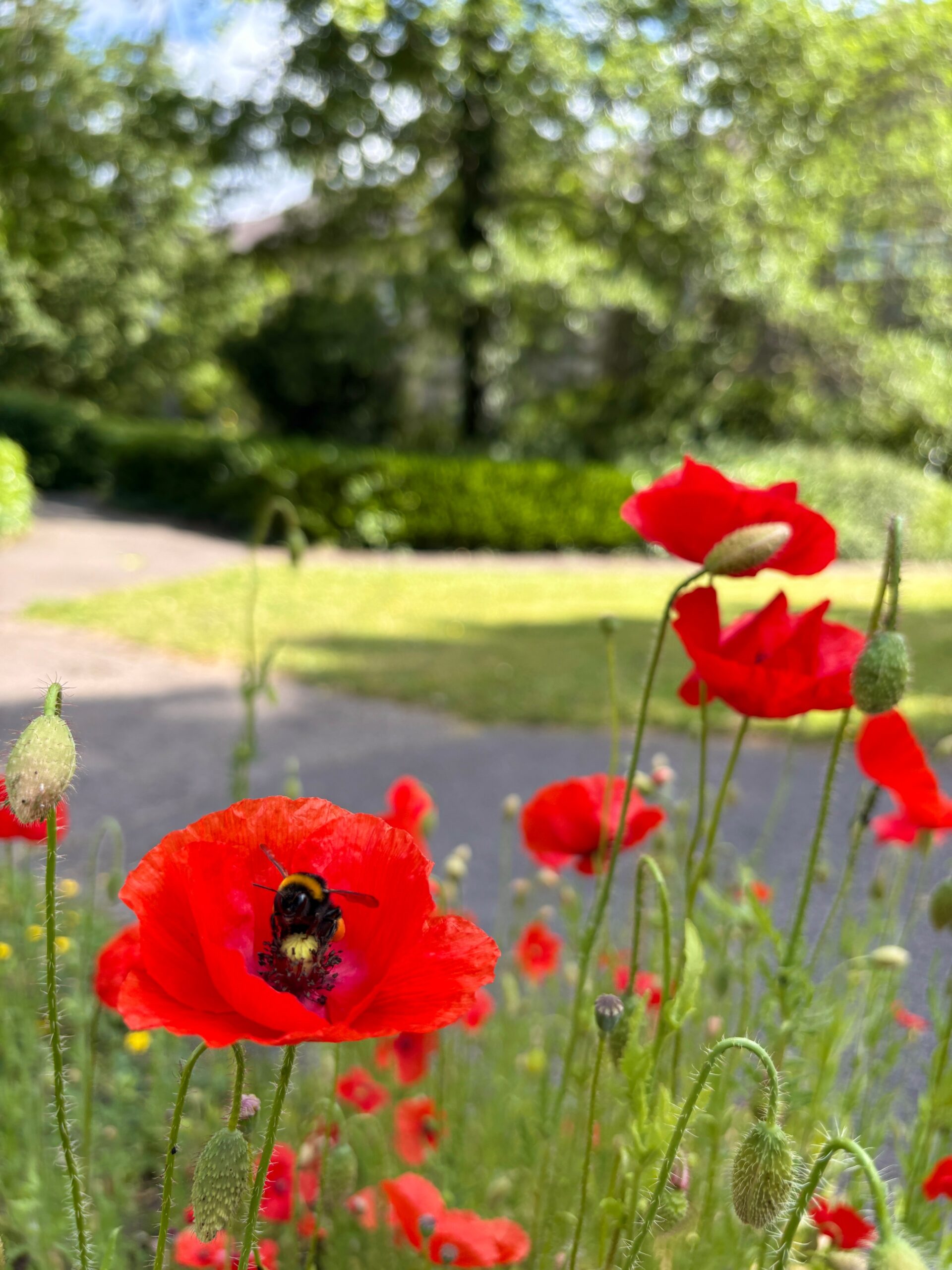
A former asylum "airing court" now a garden at UWE Glenside
Nature therapy
In the present day we don't need telling that nature and "green spaces" are good for our mental health, and we have neuroscientific research to back up our gut feeling.
In Victorian times, they had no such luxury and it was simply a case of relying on intuition and anecdotal observation. At the time it was felt that a pleasant and ordered environment accompanied by a consistent daily routine and occupation alongside adequate exercise, sleep and quality nutrition had the potential to reorder a disordered mind. This fell in line with the "moral treatment" method championed by William Tuke, a Quaker who founded The Retreat in York in 1796.
In the 1840s the population of Bristol was expanding rapidly and the only facility in which to place the mentally ill was the squalid St Peter’s Hospital in Castle Park. It was already known that the conditions there were totally unfit for this purpose: accommodation comprised tiny cramped "pens" which were unsanitary, and the only exercise space was a small paved yard.
When designing a new facility, consideration was made to both the built environment and ensuring that large aspects of the natural environment could be enjoyed, even by patients who were not permitted to leave the hospital. This would now be referred to as biophilic design; ensuring a building's features better connect its users to the natural world.
An example of this is shown above, one of Glenside's former "airing courts". Believe it or not, despite resembling a small urban park this space is entirely enclosed on all 4 sides, providing a safe dose of nature without any risk of patients escaping.
Did you know?
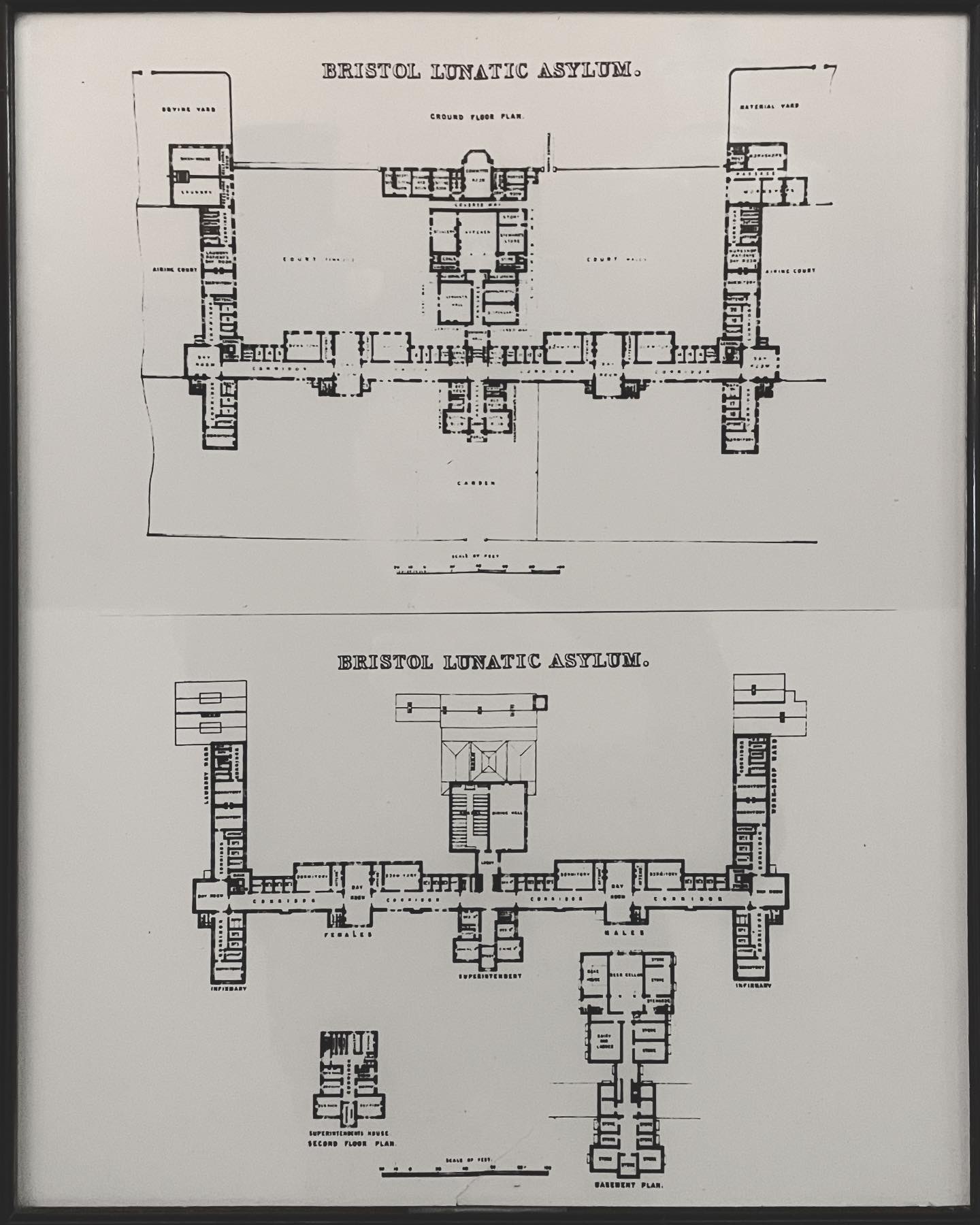
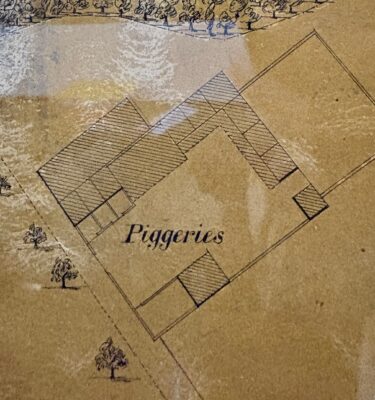
Bristol Lunatic Asylum floor plan
Bringing the outside in
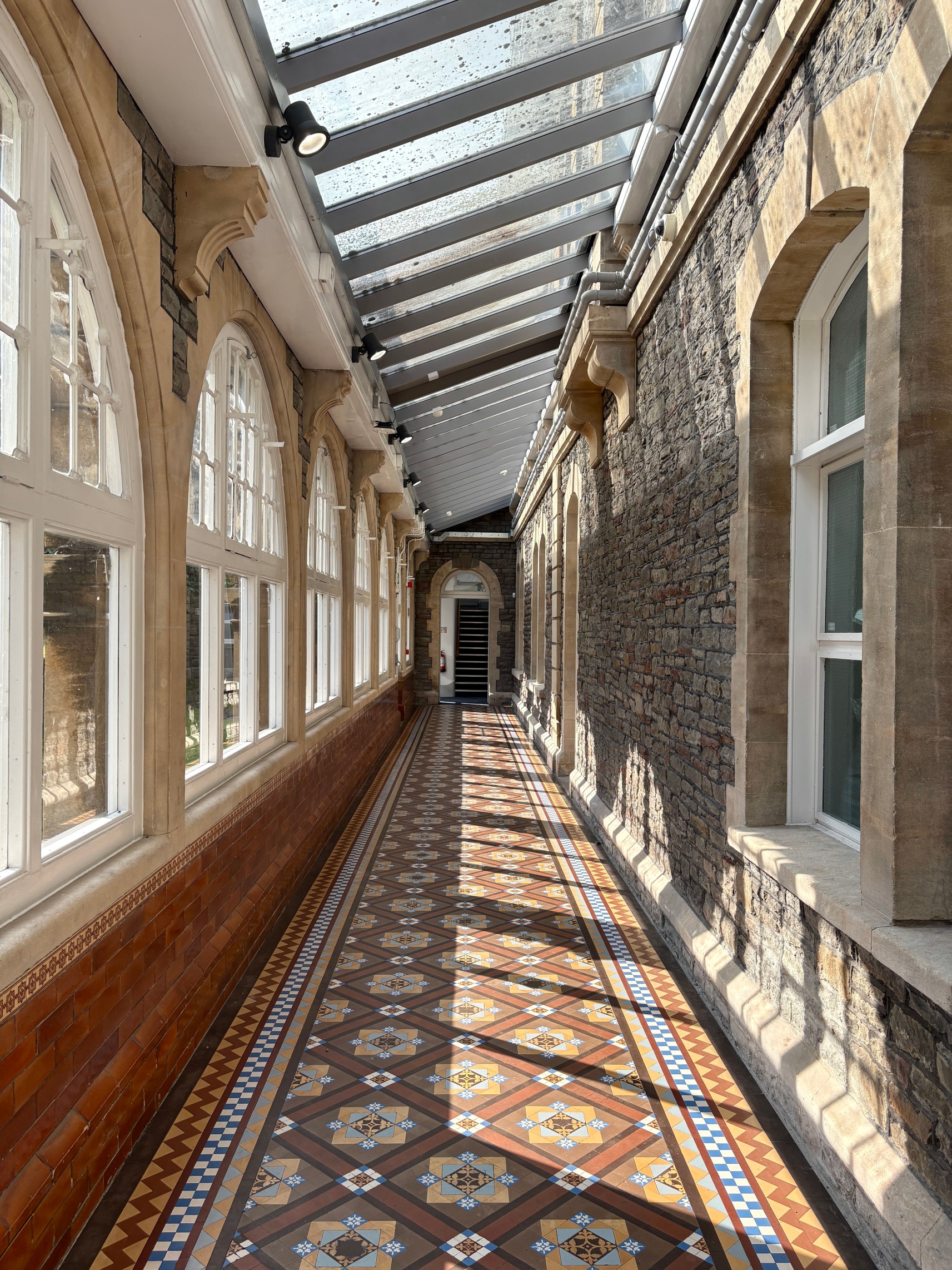
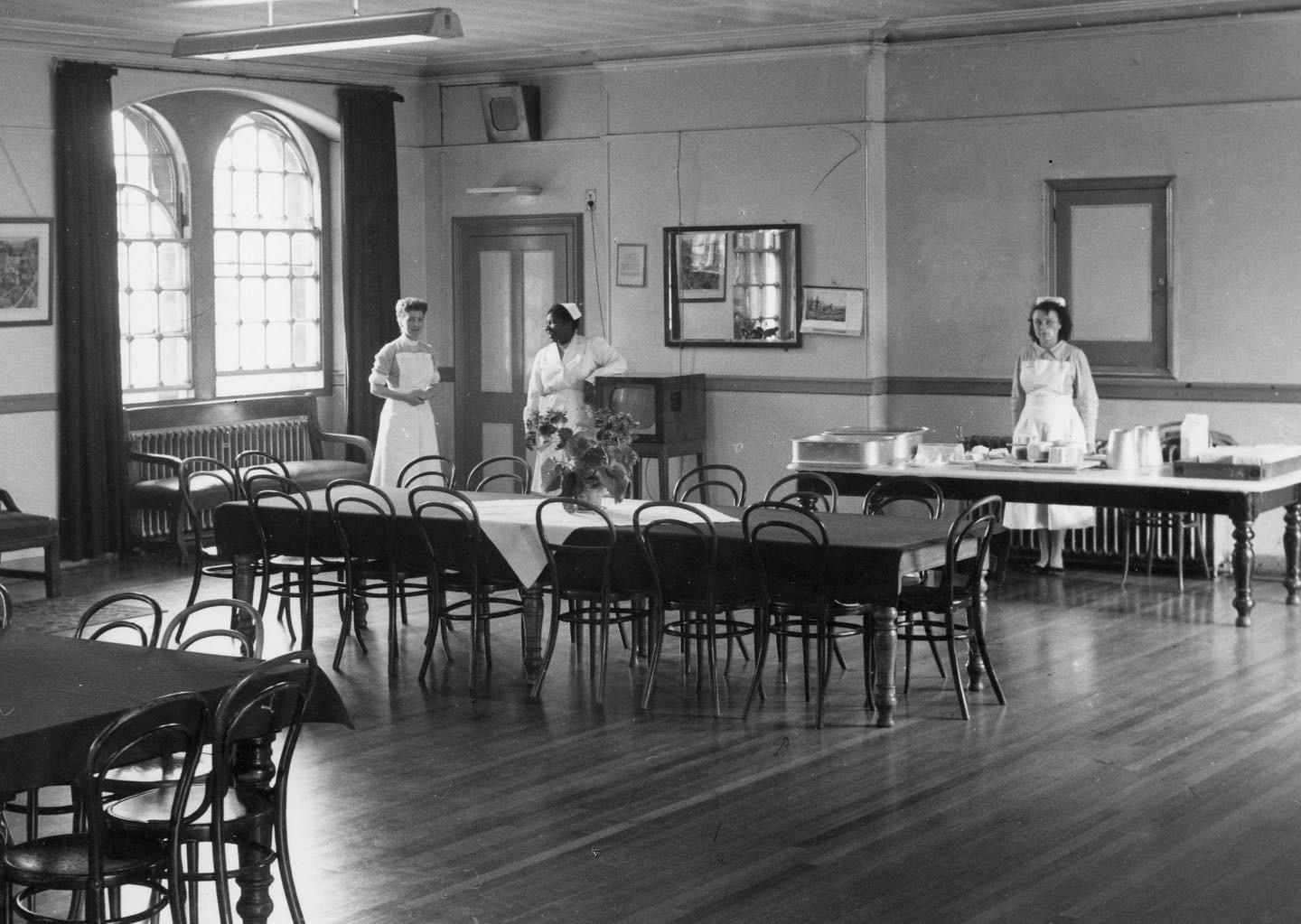
Nurses in a Glenside Hospital ward, 1950s
The influence of decoration on mental wellbeing
If you look closely at the black and white photo of a Glenside Hospital ward in the 1950s you'll notice that there is a vase of flowers on the table, which would have no doubt been freshly cut from the hospital's thriving farm and greenhouses.
In Volume II of his series of books Hospitals and Asylums of the World, Henry C Burdett declares "in the best English asylums the furniture much resembles that of a private house". He goes on to outline all the specific details that should be considered when decorating an asylum, deeply acknowledging the effect of interior design on the mentally ill.
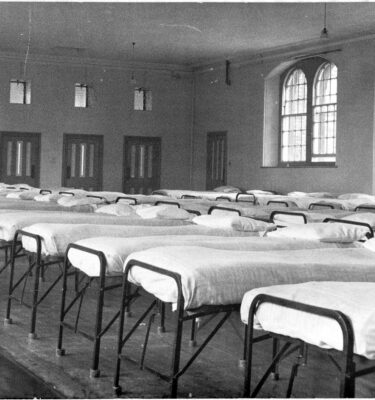
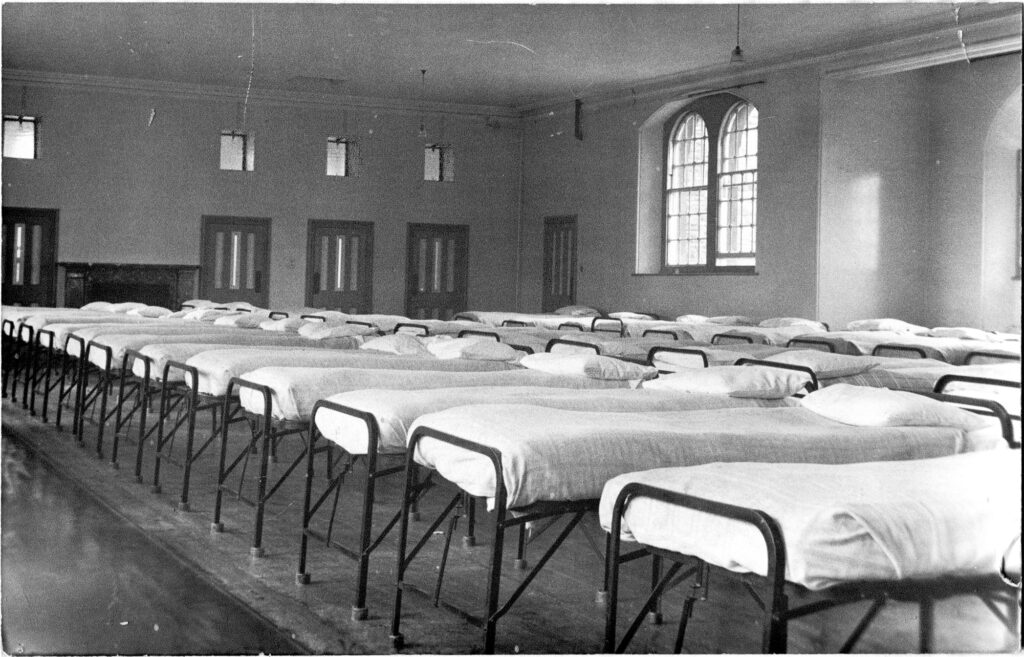
Expanses of white bedding were deemed by Burdett to be “oppressive to the eye” with "a tendency to destroy the effect of properly decorated walls and ceilings”.
Among his numerous considerations are: furniture, floor coverings, seating, tables, doors, windows and window furniture, bookcases, bedsteads, lavatories, ceilings, dado rails, wallpaper, pictures, the inclusion of flowers, ornaments and taxidermy (preferably a peacock).
"This wallpaper and I are fighting a duel to the death. Either it goes or I do"
Some of you may recognise this famous quote as Oscar Wilde's last words.
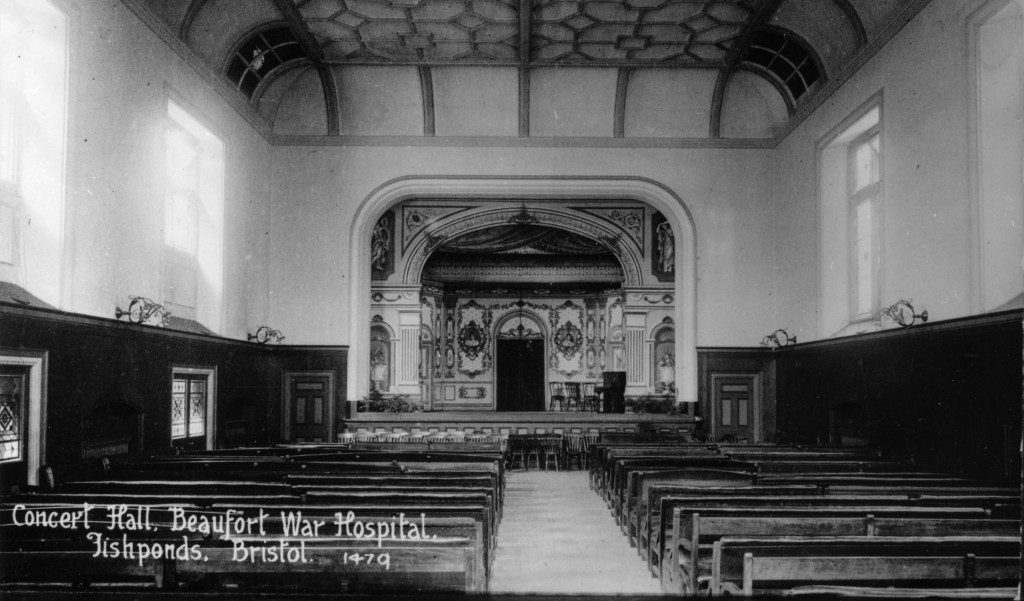
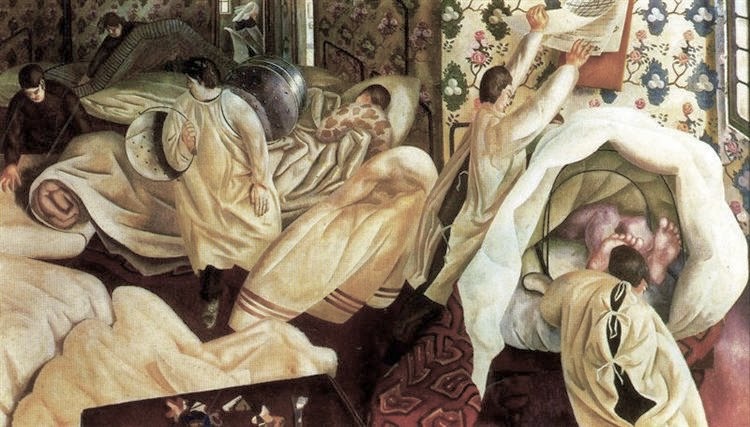
Wallpaper was the preferred wall covering in Victorian asylums, since the key aim was to replicate as closely as possible a normal home environment. Although depicting the hospital during its period as Beaufort War Hospital (1915-1919) nature-inspired wallpaper can be observed in the background of Stanley Spencer's painting Frostbite (seen above).
Henry C Burdett's specifications for wallpaper were very exacting. He rejected the use of wallpapers where "impossible flowers are seen growing, as it were, out of the skirting-board or dado line and disappearing in the ceiling".
His reasoning was a quiet acknowledgement that an unsuitable pattern could have an unbearable affect on a troubled mind, such as demonstrated in Charlotte Perkins Gilman's semi-autobiographical tale The Yellow Wallpaper penned in 1982.
Have you ever thought about the power items you live with in your home environment have to improve or worsen your mental wellbeing?

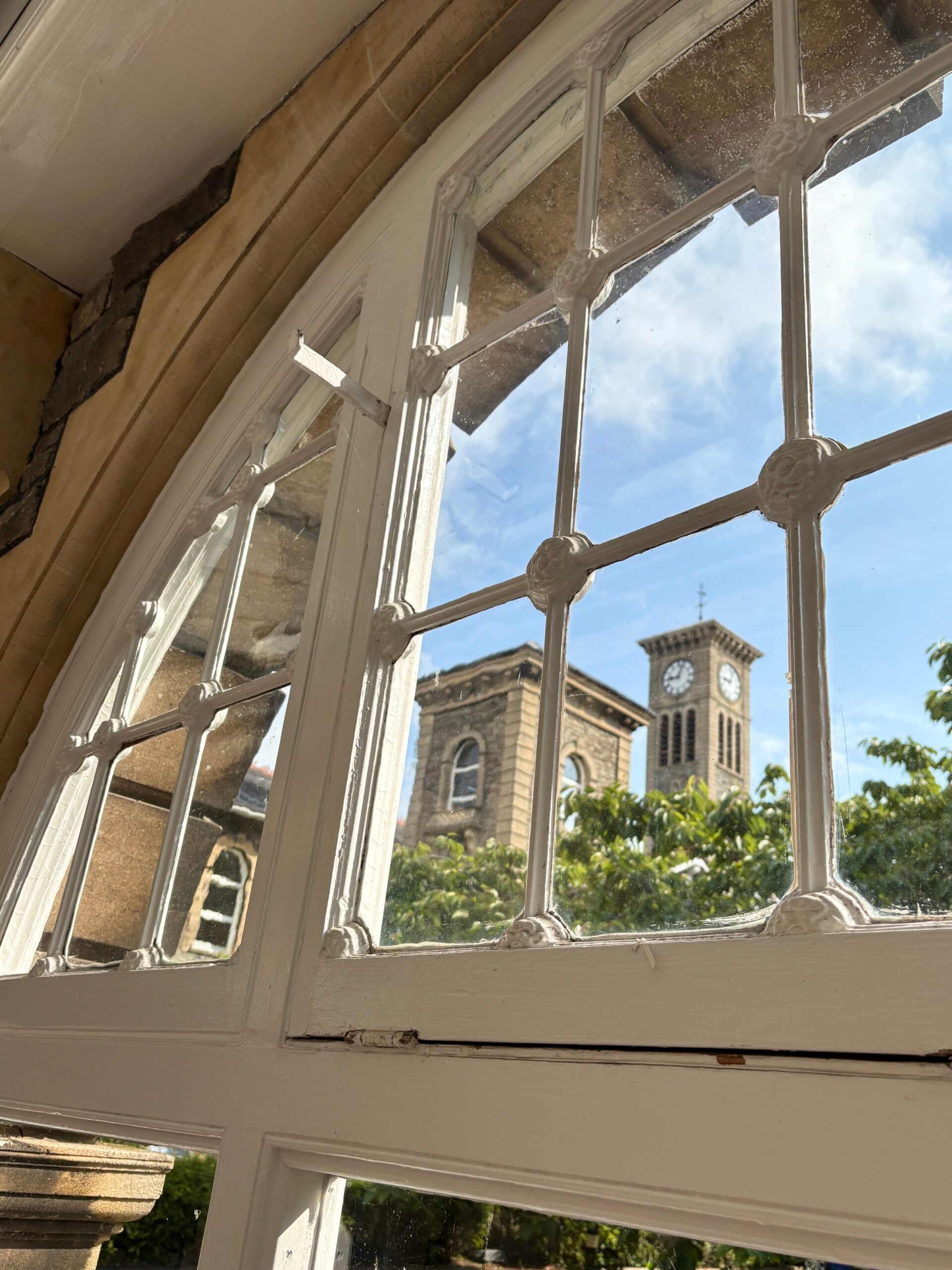
The clock tower at Glenside
Victorian visionaries
The hospital was originally designed by architect Thomas Lysaght, who already had a background in hospital design. Work began in 1858 and was completed by 1861.
Later extensions were added in 1892-1894 including the iconic central clock tower courtesy of Henry Crisp and Sir George Oatley, a famous Bristol-born architect who also designed the Wills Memorial building at Bristol University.
Over the years, the majority of interior design in hospitals has been lost to essential hygiene protocols and budget constraints. While sanitary and highly effective, modern hospitals are no longer synonymous with a patient's home environment.

Explore the 5 pillars of early mental health care via the following blog posts:
- A history of hospital food: feeding body and mind
- Movement as medicine: exercise in early mental health care
- Sleep and sanity: why is rest so important?
- Occupational health: the healing power of purpose
Better still, pay us a visit at the museum or visit us virtually using the Bloomberg Connects app.


Contact us about the museum