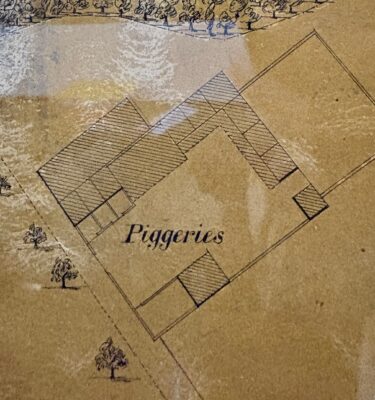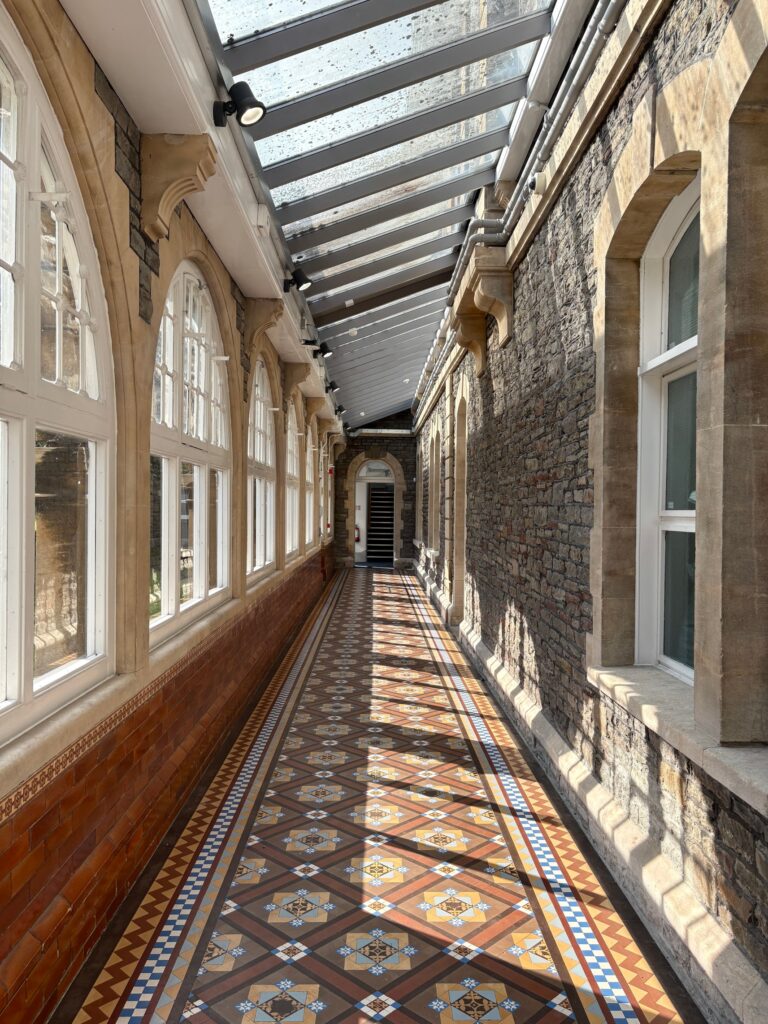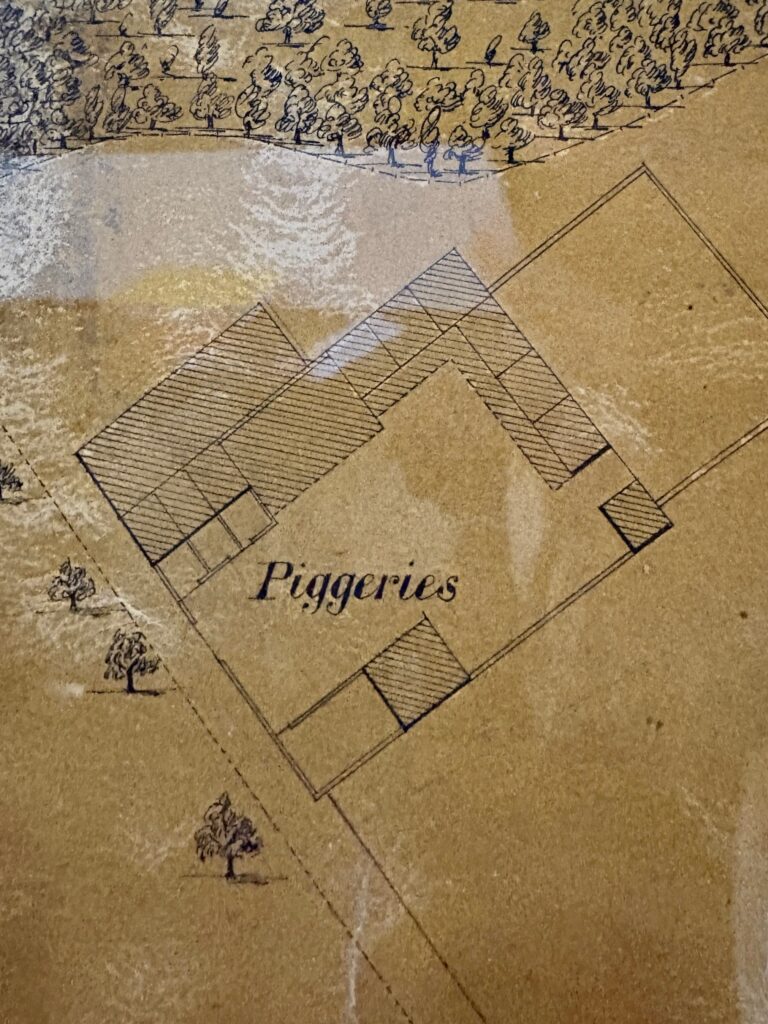
Glenside Hospital’s grounds + outbuildings
Occupational health: The healing power of purpose


Exploring Glenside
In 2025 Glenside Hospital Museum received funding from the National Lottery Heritage Fund in support of the Protect our Wellbeing (PoW!) project.
This has given us a precious opportunity to explore and preserve the history hidden within the walls of the former Glenside Hospital (originally purpose-built as Bristol Lunatic Asylum).
Read on for some fascinating facts about the hospital including its buildings, wards and grounds.
If you'd like to join us for an in-person guided tour of the grounds, check our events calendar and look out for Exploring Glenside events, or download the Bloomberg Connects app to follow a free self-guided trail.
In the process we hope you'll be enlightened by the approach to mental health care in years gone by, many elements of which are being gradually reintroduced back into mainstream medicine.

The former Top Lodge, now crime scene house at UWE Glenside
Top Lodge
Once home to the hospital's resident lodge porter
The resident lodge porter who lived at Top Lodge, next to the main entrance, would lock the hospital's main gates at 11pm.
Also serving as the hospital telephonist, upon locking the gates he would then go off duty, only available in an emergency throughout the night.
All hospital wards and hospital doors were locked by night and all except three wards: two male and one female, which were locked 24 hours a day.
Top Lodge is now used as the University of the West of England's "Crime Scene House" where simulations of real-life situations aid in training midwives, occupational therapists, nurses, paramedics and social workers, amongst others.
Aside from a teaching room full of desks it is mostly set up to resemble a real 2 bedroom home.

Photographs from Beaufort War Hospital
A Stanley Spencer connection
Memories from the First World War
The artist Stanley Spencer once worked as an orderly at Glenside when it was requisitioned by the war office to serve as Beaufort War Hospital during WW1.

The Old Tavern, Blackberry Hill in 2025
The Old Tavern
A once-thriving public house
While not a hospital building, The Old Tavern pub on Blackberry Hill could have been considered an honorary part of the estate, owing to its proximity and its enduring popularity with staff and patients.
Mike Liddington, a driver in the Glenside Hospital transport department in the 1960s & 1970s recalled of the patients' earnings from industrial therapy:
“They didn't mind doing the work, I'd never heard anyone complain, they were never forced to do anything. They would use the money in the tuck shop or sometimes The Old Tavern public house."
In 2025 The Old Tavern is in a rather sorry state, having been disused for several years. It is awaiting planning permission for potential future development.

UWE accommodation, once Glenside Hospital nurses' home
The Nurses' Home
Convenient accommodation for staff
Located directly opposite the main grounds, the nurses' home provided basic but convenient accommodation for Glenside Hospital staff, being just a couple of minutes' walk away from the hospital.
If nurses weren't at work, they could often be located at the Glenside Hospital social club, Old Tavern pub or simply hanging out in the grounds.

Grade II listed since 1990, originally an isolation hospital
A 20th century isolation hospital
From isolation hospital to psychiatric care
A walk through the grounds of Glenside is like a walk back in time. This plot of land was acquired in 1900, is separated from the main building by a couple of hundred yards.
It was originally designed as an isolation hospital by architects Henry Crisp & George Oatley (the latter being Bristol's most renowned architect who oversaw the University of Bristol's Wills Memorial building at the top of Park Street).
What is an isolation hospital?
By 1901 it was occupied with patients. In the 1930s the isolation hospital and the so-called “Work Ward” were the only unlocked wards for men, between them housing 40-50 patients.
The late 1940s saw tuberculosis running rampant throughout the hospital. An open veranda was fitted with protective boarding against the weather providing separate “open air” accommodation of a crude, cold and uncomfortable kind.

Orchard Day Hospital, 2000. Credit: Historic England / Cyril N Chapman
Orchard Day Hospital
A progressive psychiatric environment
In its later years the building, then named Orchard Day Hospital, was nicknamed The Bungalow by staff, and offered therapeutic interventions for outpatients seeking mental health care.
Its current incarnation is Acer Unit, an NHS 10-bed residential eating disorder unit, part of Blackberry Hill Hospital.
The Glenside Day Hospital was the most progressive psychiatric environment I have ever worked in. It was really unique.
The Consultant was Graham Stimson and he believed in a psychotherapeutic approach rather than medication. So we did nothing but group therapy, drama therapy, yoga, art, community meetings etc. It really was better than anywhere l've worked since.
I left to go to University, a goal I'd been pursuing for a while. I was really sad to leave.
Lin Bigwood, nurse at Glenside Hospital 1973-1978

UWE's Bristol Eye Clinic, 2025
Prichard Clinic
Acute psychiatric wards at Glenside
Prichard Clinic wards P1 and P2 opened in 1955, named after James Cowles Prichard, a pioneering psychiatric theorist in the formative years of the discipline and one of Europe’s leading anthropologists.
In Prichard 1 and Prichard 2 patients with acute psychiatric illness could be treated in wards which provided more modern surroundings than the rest of the hospital's Victorian buildings.
Pictured here in 2025, this building is now the Bristol Eye Clinic, part of the University of the West of England's school of health and social wellbeing.

The former hairdressers' building at Glenside
The hairdressers
A morale boost for patients
"It was sort of an adoptive family in there. It was another world, the whole place at that time was a very happy environment. Everyone was very friendly".
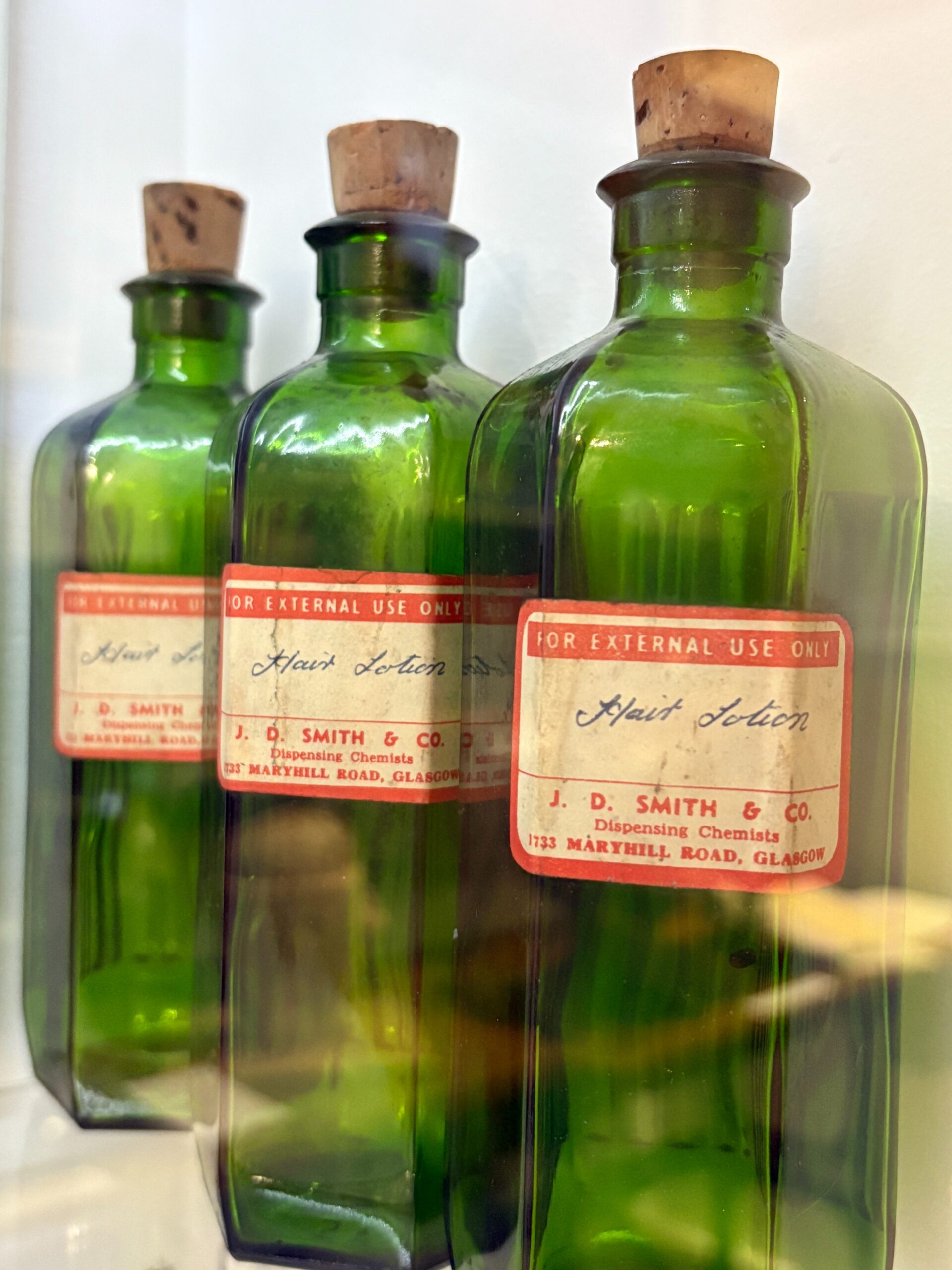
Hairdressing display at Glenside Hospital Museum
Difficult customers
Challenging but rewarding work
"Some patients said they didn’t want my rusty scissors on their hair; one patient, who had been very difficult, looked up once I’d finished and she said, 'Thank you dear that’s lovely.'You had achieved making someone happier, it was worthwhile even if they were difficult."Jean Martin, Glenside Hospital hairdresser

One of Glenside's former works departments
Works department
A hive of staff and patient activity
This used to be the Glenside Hospital works department, including carpentry and upholstery.
Patients also used to undertake occupational tasks here, as part of their treatment for mental illness.
There were also works department buildings elsewhere on the Glenside site.
The building is currently the medical records department of the Avon and Wiltshire mental health partnership NHS Trust (AWP) for the hospital buildings on site at what is now Blackberry Hill Hospital.

Once served as accommodation for staff at Glenside Hospital
Staff accommodation
Adjacent to the hospital
This house on Blackberry Hill used to serve as accommodation for the senior nursing officer at Glenside Hospital. Gerard McDonagh (known to all as “Mac”) held this position from 1971-1977 and lived here with his family. His son Steve recalls:
“Memories are from childhood, I used to hang out in the grounds a lot. We moved from Barrow Hospital, and Cane Hill in Surrey before that.
I remember the air raid siren every Sunday morning, watching the cricket, sketching the clock tower and living at the bottom gate.
The house has changed a bit as it had a front gate, and gates for a car where the railing is now. The garden also had trees and grass etc. and a strange fruit tree behind the house, that I’ve never seen anywhere else.
I remember the many feral cats, and dropping down to Snuff Mills through the broken fence at the back of the hospital, near the tuck shop.
I used to stick up skittles in the social club and got to know the 'Chambers' who ran it. It always seemed lively and friendly in there.
We used to be friends with the vicar of the church, Meredith Jones, I believe it was, but my memory is a bit foggy!”
Did you know?

Historic picture of Glenside Hospital tuck shop
Tuck shop
A patient favourite
Cigarettes were by far the most popular purchase by patients in the hospital shop, though sweets and magazines were also popular. Smoking played an important role in the lives of psychiatric patients.
An activity that was within their control, smoking introduced the potential of social exchange between people: other patients and the staff who cared for them.
Until 1926, patients had been rewarded for good behaviour and part-time work with cigarettes. This arrangement was replaced by the Tally System, where patients were paid with tokens, which could be spent in the hospital shop.
The system was still in use in the 1950s and records show 60 - 70% of the tokens being spent in the shop were exchanged for cigarettes.

Tuck shop has now become UWE's student laundrette
Then and now
Changing with the times
When the hospital became an NHS facility in 1948 many changes occurred. These were mostly positive but some had unhappy effects, as in the case of long term resident patient who for years had successfully managed running the patients’ tuck shop.
The new administrative correctness required that professional business supervision be provided.
The patient was asked to resign to make way for a paid shopkeeper. His small stipend was continued but his loss of status led to relapse into deep depression, a condition from which he had been free for several years. He never recovered, and later took his own life.
In the present day, the tuck shop building is now UWE's laundrette.

If you're keen to explore the history of Glenside Hospital more, please visit the following blog posts:
- Glenside Hospital's grounds and outbuildings
- What impression did Glenside Hospital have on those who lived and worked there?
- Butlins, stranger than a psychiatric hospital
Better still, pay us a visit at the museum or visit us virtually using the Bloomberg Connects app.
REVIEWS
Visitor feedback

Explore our collection from anywhere
Discover the fascinating history of Glenside Hospital Museum wherever you are. Browse our collection virtually through the free Bloomberg Connects app, and don’t miss our specially curated Top 20 Highlights Tour.