The Power of Listening

Every Picture Tells a Story
11th April - 13th May 2022
This film installation spotlights a pivotal, yet often overlooked, moment in the history of medical cinema. Bringing to life one of the world’s first attempts to incorporate the cinema into psychotherapeutic treatment, the installation showcases the short film, I Do Not Want To Smoke (2020).
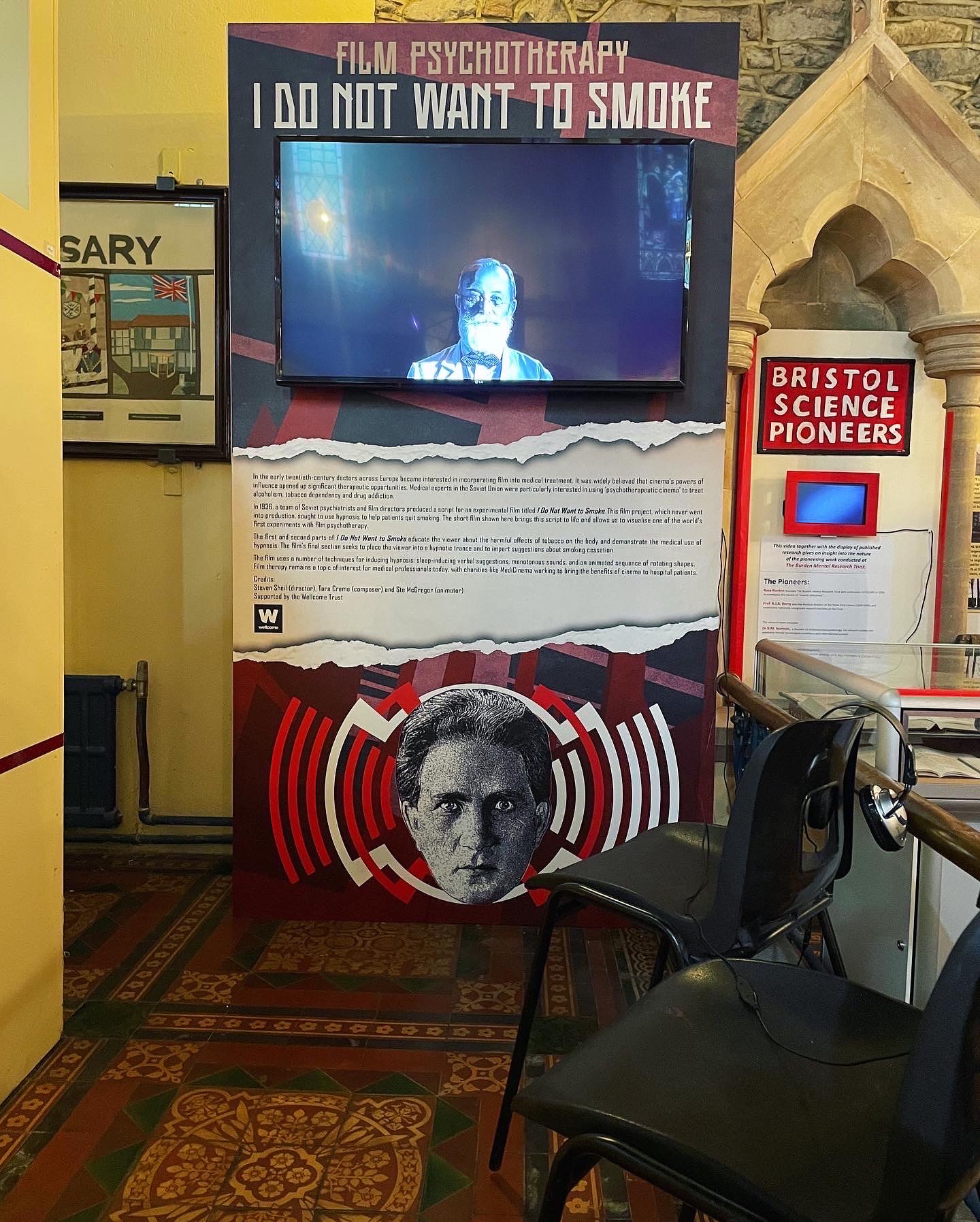
I do not want to smoke - at Glenside Hospital Museum
About the Production
I Do Not Want To Smoke was produced in 2020 by Anna Toropova (University of Oxford) in collaboration with Steven Sheil (director), Tara Creme (composer) and Ste McGregor (animator). Whilst not attempting an historical reconstruction, the film seeks to honour the aesthetics and practices of 1920s and 1930s cinema.
Using lights, camera lenses and framing consistent with the period, I Do Not Want to Smoke takes inspiration from the animations deployed in early Soviet health education films, and deploys an in-camera transformation effect pioneered by the American cinematographer Karl Struss.
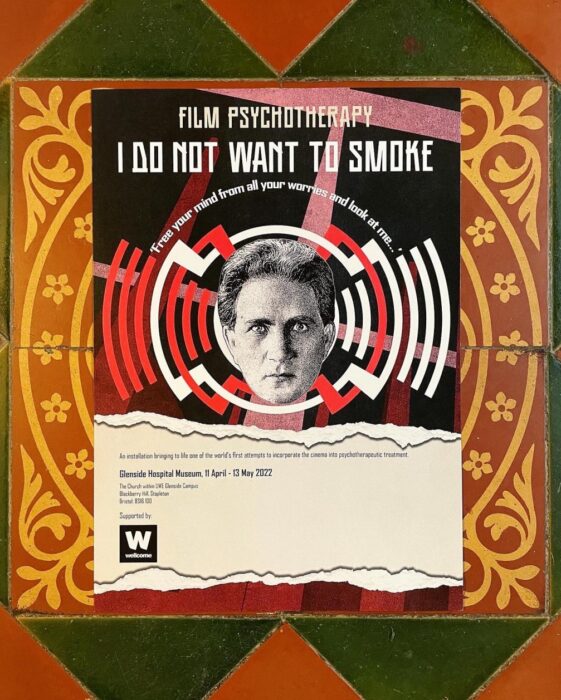
Can film hypnosis help you to stop smoking?
The film is based on a script published in the Soviet Union in 1936 but never produced. Demonstrating cinema’s capacity to aid medical treatment, the film attempts to use hypnosis to help patients quit smoking.
This film script was developed when smoking was being heavily promoted. Smoking continued to be for the next 50 years despite evidence that it was seriously bad for people’s health.
Visit Us
Glenside Hospital Museum is located within the grounds of the old psychiatric hospital housed in the 1881 Grade II listed asylum church. The main hospital building is now used by the University of West of England as their Health and Social Care Campus. We’re in situated in the Grade II listed church just inside the grounds. For more details, including group booking and accessibility, please see our visiting page.
"If you have never been to Glenside Hospital Museum, it is a wonderful museum. It is not gloomy or depressing but fascinating and hopeful. A really progressive institution."
Julie Begen
"A fabulous history of the area, the hospitals, and of approaches to mental health and learning disabilities. An amazing array of artefacts, surgical instruments and ephemera. The staff were really welcoming and knowledgeable. Absolutely loved it!"
Lea Roberts
Contact us about the museum